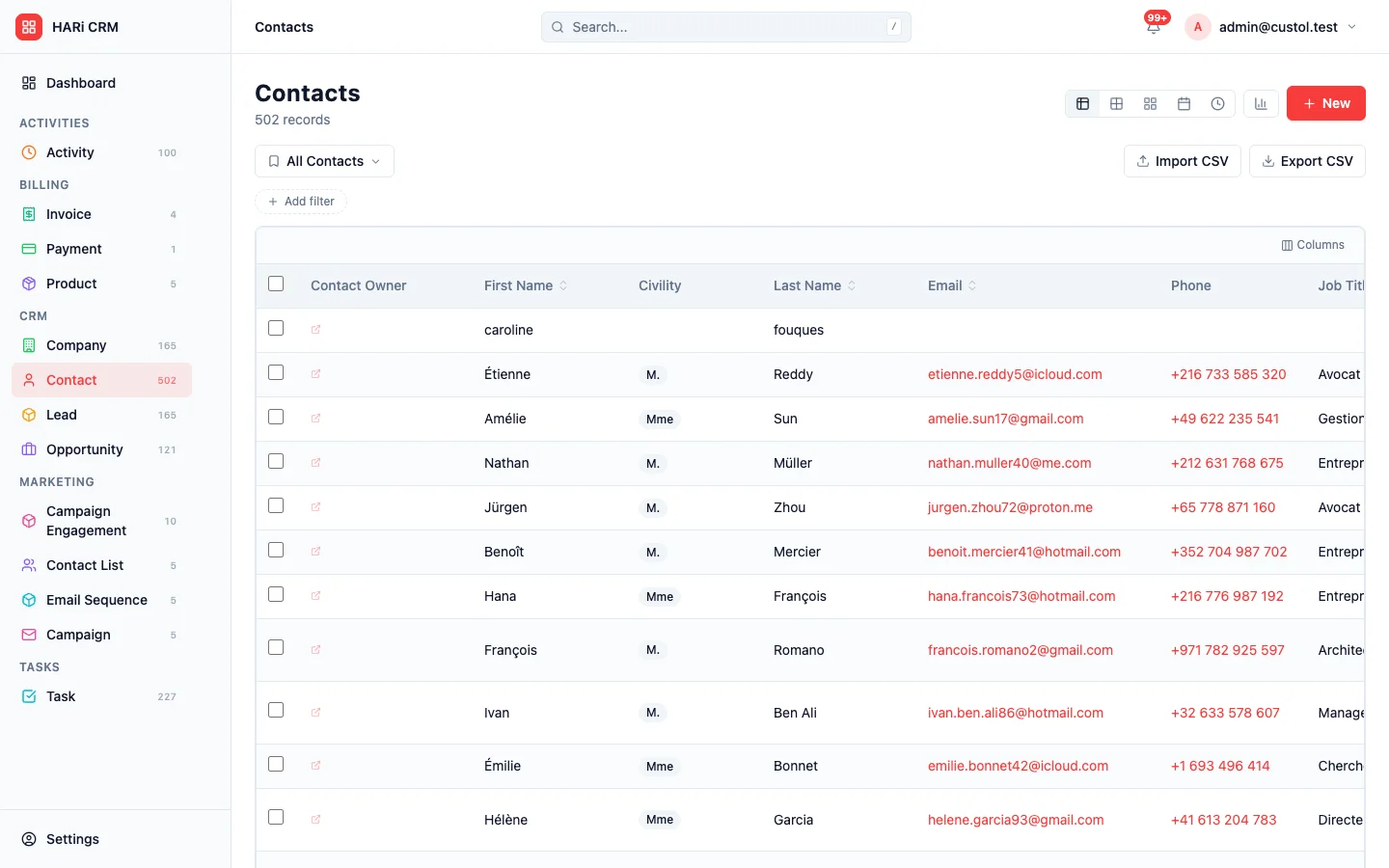
It is the second week of February. You are Ms. Wong, running a four-person CPA practice on the eighth floor of a walk-up off Wellington Street in Central. Audit season has started. Your team is balancing twenty-three statutory audits with December year-end, eleven profits tax computations due before the end of April, six clients chasing you for their BIR56A submissions, and two new prospects who walked in last week because their previous accountant retired. Your senior is asking which audit working papers you signed off last night. Your bookkeeper is asking whether the Wan Chai trading client’s MPF return was filed. And somewhere in your inbox, a client is following up on a Business Registration renewal you meant to remind them about three weeks ago.
You know where every piece of information lives — which folder, which Excel sheet, which WhatsApp thread. The problem is not that you do not know. It is that all the knowledge lives in your head, and your head does not scale beyond about thirty active clients before things start slipping. The work itself is not the bottleneck — the relationships, deadlines, and follow-ups around the work are.
Why generic CRMs do not fit accounting practices
Most CRM products are built for sales teams. They have pipelines with stages like “Prospect”, “Qualified”, “Closed Won” — designed for businesses where the goal is to acquire new customers and the relationship ends when the deal is signed.
An accounting firm is the opposite. New client acquisition is occasional. The real work is managing the clients you already have, year after year, across recurring deadlines and ad-hoc requests. A “Lead → Won” pipeline tells you nothing about whether the Tsim Sha Tsui import-export client’s profits tax return is overdue, whether the Mong Kok F&B group’s MPF contributions have been processed for March, or whether you remembered to remind the property holding company about its annual return.
Generic CRMs also assume one customer record equals one company. Hong Kong accounting clients rarely look like that. A single client often means a director who owns three holding companies, two trading entities, and a property investment company — each needing separate Business Registration renewals, audits, and Companies Registry filings. The director is the relationship. The companies are the engagements. A CRM that cannot model this will force you to fight it every day.
The four pains of running a small CPA firm in Hong Kong
Audit season is a deadline avalanche. From January through April you are running every December year-end audit you accepted, plus the profits tax computations that follow. HKICPA quality control is non-negotiable. The IRD is unforgiving on missed deadlines. Your team is at full stretch, and clients are calling — some with urgent questions, some chasing engagement letters, some asking why you haven’t started theirs yet. Without a system that shows every active engagement, working paper status, and unanswered query in one view, you spend half your time switching between Excel sheets.
Recurring filings are easy to forget when the client is quiet. A bookkeeping client whose Business Registration renews in November needs a reminder in October. An employer running monthly payroll needs MPF remittance every month. IR56B forms are due before the end of April, after the BIR56A employer’s return is issued by the IRD on the first working day of April. None of these generates a client call until something has gone wrong. The job of the firm is to remember on the client’s behalf — and a spreadsheet will eventually let one slip.
Multi-service clients are messy to track. Most small Hong Kong CPA firms do not just do audit and tax. They also offer company secretarial services — annual returns, directors’ resolutions, share transfers. They run payroll and MPF. They handle bookkeeping for clients who do not maintain their own ledgers. A single engagement letter might cover all four, each with its own deadlines and fees. Tracking what was delivered last month and what is due next month is harder than the actual work.
Knowledge walks out when staff leave. The Hong Kong accounting labour market is brutal — juniors and audit seniors often move firms every twelve to eighteen months. When a senior leaves, they take with them the institutional memory of their clients: the running issues, the personalities, the side requests that never made it into the engagement letter. The new person inherits files but not the relationship. The client feels it within a week.
What a CRM actually changes for an accounting firm
A CRM for an accounting practice is not a sales tool. It is a client and engagement management system. Used properly, it does five things that directly affect how the firm runs.
A single client record that survives staff changes. Every interaction — emails, phone calls, meeting notes, ad-hoc queries — gets logged against the client record. When the audit senior who handled the Causeway Bay restaurant group resigns, the new senior opens the record and sees the full history: every prior year’s notes, every IRD correspondence, every recurring issue with the directors’ loan account. The handover takes a morning, not a month.
Recurring filings surfaced before they are due. Each client has a list of recurring obligations: Business Registration renewal date, profits tax filing deadline, MPF monthly remittance, employer’s return, annual return, audit completion. The CRM holds these as scheduled tasks. Two weeks before a BR renewal, the system flags it. Three weeks before profits tax, it shows up on the partner’s dashboard. The team stops relying on memory and works from a list that updates itself.
Relationships separated from entities. One director (or family, or group) is the client relationship, and that relationship covers multiple companies, each with its own filings and engagements. When the director calls, you see all the entities on one screen with the status of each.
Dual-language preferences recorded. Some clients prefer English. Some prefer Cantonese with written messages in Traditional Chinese. Tagging the preferred language on the contact record means you do not send a Chinese reminder to a director who only reads English, or vice versa.
Audit season visible at a glance. Instead of opening five Excel sheets, the partner opens the dashboard and sees: thirteen audits in fieldwork, six in review, four awaiting client information, two ready for sign-off. Each one shows which staff is on it, the next step, and the deadline. This is what lets a small firm survive January to April without burning out.
How a four-person Central practice uses HARi
Picture a small CPA firm with four people: Ms. Wong (partner), an audit senior, a junior accountant, and a part-time bookkeeper. They have around fifty active clients — thirty on annual audit engagements, fifteen bookkeeping-only, the rest ad-hoc tax work.
Monday morning during audit season. Ms. Wong opens HARi and looks at the audit dashboard. The Tsim Sha Tsui trading company is at fieldwork with the senior assigned. The Sheung Wan property holding company is awaiting bank confirmation — flagged red because it has been outstanding for nine days. The Wan Chai consulting company is in final review and ready for sign-off. She signs off, chases the bank for the Sheung Wan confirmation, and assigns the junior to the next engagement.
MPF reminders that file themselves. The bookkeeper handles MPF for eight client companies. Every month on the 5th, HARi shows her a list of the eight remittances due, with the contact, the estimated contribution amount, and last month’s submission status. The list is generated automatically from the recurring task definitions on each client record.
Annual return reminders that prevent late penalties. Each Hong Kong company has its own annual return deadline, 42 days after the anniversary of incorporation. HARi surfaces it three weeks in advance. The annual return gets prepared, signed by a director, and filed with the Companies Registry on time. No more apologetic phone calls explaining late filing penalties.
Audit season post-mortem. After filing season ends in early May, Ms. Wong runs a review. HARi shows her time tracked against each engagement, realisation rate per client, and which clients required the most out-of-scope ad-hoc requests. Two clients accounted for 40% of unbilled overruns. Next year, their engagement letters get rewritten with clearer scope and a separate hourly rate for out-of-scope work.
Company secretarial work in the same system
Most small Hong Kong CPA firms also offer company secretarial services. In HARi, each client company record holds its directors, registered office, last annual return date, next Business Registration renewal, share capital structure, and a log of every secretarial action — directors’ resolutions, share transfers, changes to the register of significant controllers. When a director calls about adding a new shareholder, the firm pulls up the company record, sees the current shareholding and the last share transfer, and walks through the steps without going back to the file room. The side service that nobody used to track becomes a tracked service line with its own deadlines and fees.
Why per-seat pricing is wrong for a small accounting firm
A typical small Hong Kong CPA practice has between four and twelve people — a partner or two, audit seniors, juniors, possibly a bookkeeper and a part-time receptionist. Every one of them needs access to client records during their work.
If you are paying HK$400 to HK$800 per user per month for a generic CRM, a six-person team is spending HK$2,400 to HK$4,800 monthly before the system has saved a single hour. Add a junior in February for audit season overflow, and you add a seat. Bring in a contractor for two months, and you either pay for another seat or do not give them access.
HARi is priced as a flat HK$1,990 per month for the whole workspace, regardless of headcount. Whether you have four people or twelve, the cost is the same. Bring in a temp for audit season, give them access from day one, remove them in May — no licence calls, no friction. The full reasoning is in the problem with per-seat CRM pricing.
What to set up first
Do not try to build a perfect system in week one. Start with four things:
Import your client list. Every active client, with the directors, the company names, contact details, and the services you provide. Most firms have this in an Excel sheet already — if not, an afternoon of data entry from your engagement letters folder will get you there. The practical guide to moving contacts from a spreadsheet walks through it.
Set up recurring task templates for the standard filings. Profits tax filing, BIR56A, IR56B, MPF monthly remittance, Business Registration renewal, annual return, statutory audit. Each becomes a template you apply to a client with the right dates filled in. Every new client then gets the right reminder schedule in two clicks.
Log every active engagement. For every client where you currently have work in progress — an audit at fieldwork stage, a tax computation in preparation, a payroll cycle being processed — create the engagement record with the responsible staff member, the deadline, and the status. This gives you the dashboard view you currently do not have.
Start logging client communications from today. Every email, phone call, and meeting gets a one-line note in the CRM. Not the full transcript — the outcome. “Director called about adding new shareholder, advised to wait until after BR renewal in November”. After three months, every staff member can serve any client without asking “what did we agree last time?”.
That is a week of part-time setup, and these four alone change how the practice runs.
Try it during a slow period
Audit season is not the time to roll out new software. The right time is May or June, after the deadline rush and before December year-end engagements ramp up. Set aside two weeks. Import your clients. Configure the recurring tasks. Train the team. By the time the next audit season starts, the dashboard is your single source of truth.
Hong Kong accounting firms grow on referrals from satisfied clients. The firms that stand out are the ones whose clients never have to chase them, never have to repeat themselves, and never feel forgotten between filing seasons. A CRM does not create that quality of service — your team does. But it gives you the infrastructure to make it consistent across every client, every staff member, and every year.
HARi CRM offers a 14-day free trial — no credit card required.
Related reading:
- CRM for Professional Services Firms in Hong Kong — broader view of how Hong Kong professional services firms use a CRM
- CRM for Trading Companies in Hong Kong — many of your audit clients are trading companies — here is how they think about CRM
- The Problem with Per-Seat CRM Pricing — why flat-rate pricing makes more sense for small accounting teams
- How to Move Your Contacts from a Spreadsheet to a CRM — practical guide to getting your existing client data into a system