Hong Kong’s beauty and wellness industry is one of the most competitive service sectors in the city. Facial studios in Causeway Bay, hair salons in Mong Kok, body treatment spas in Tsim Sha Tsui, and aesthetic clinics offering laser or injectables in Wan Chai — there are thousands of them, and they all share a fundamental business problem: getting a client to walk through the door is expensive, but getting them to come back is where the real money is.
The businesses that thrive in this space are not always the ones with the best therapists or the newest equipment. They are the ones that stay in contact with their clients between appointments, track what treatments each person has had, and make each visit feel like a continuation — not a fresh start.
Most salons and clinics are not doing this. They’re running on a combination of booking apps, WhatsApp messages to clients they remember well, and a vague sense that they should probably follow up more. When a client doesn’t rebook after their last facial, nobody notices until too much time has passed.
The repeat-revenue problem
A beauty or wellness business lives or dies on repeat visits. A single facial appointment at HK$800 is fine. The same client returning every six weeks for a year — twelve visits at HK$800, plus occasional add-ons and product purchases — is HK$10,000 or more in annual revenue from one relationship. The economics are stark: keeping a client is worth far more than finding a new one.
This is not a new insight. Every salon owner knows it. The problem is that most don’t have the systems to act on it consistently.
A client completes a course of six sessions. The sixth session ends, the client pays, she says she’ll book again soon, and she leaves. Two months later she hasn’t booked. Three months later she’s been to a competitor in the same building who sent her a WhatsApp about a promotion the week after her last visit. Your salon lost that client not through bad service but through silence.
The treatment package sits as a reference to what someone bought — not a relationship to be managed.
Three businesses, three familiar patterns
The nail and beauty salon in Causeway Bay. A four-person team running a busy walk-in and appointment mix, mostly targeting young working women in their twenties and thirties. They use a shared Google calendar for appointments and WhatsApp to confirm bookings. Their regulars are loyal, but the owner, Vivian, cannot tell you with any confidence how many clients have lapsed — people who used to come in every few weeks but haven’t been back in two or three months. She knows some of them. She doesn’t know all of them.
Every month she runs a promotion and sends it to a WhatsApp broadcast list that she assembled manually over years. She doesn’t know which clients convert from the promotion, which ones have already left, or which ones are worth targeting differently. The promotion goes to everyone and costs the same whether it reaches a loyal monthly client or someone who visited once three years ago and moved to a different district.
The wellness spa in Tsim Sha Tsui. Four treatment rooms, a team of six therapists, and a membership-based model where clients buy packages of sessions — body treatments, lymphatic drainage, slimming programmes. Package tracking is done in a spreadsheet. The receptionist, Alice, updates it when a session is used. But the spreadsheet is not visible to therapists during a session, so clients sometimes disagree with the count. And when Alice is not in, nobody is confident they’re checking the right version.
Two types of revenue leakage happen here regularly. First: packages expire because the client ran out of sessions, didn’t notice, and assumed there was still time left — leading to disputes and unhappy goodbyes. Second: clients who finish a package are not proactively offered renewal before they walk out the door. Some come back. Others try somewhere else and don’t return.
The aesthetic clinic in Sheung Wan. Four doctors and nurses offering laser treatments, skin boosters, and injectables. Each client has a treatment record — a paper file or a notes document — covering what was administered, at what dosage, and when. But the business side of the client relationship lives separately: which treatments they’ve enquired about, whether they’ve been sent information about a new service, when their last visit was and whether they’re due for a follow-up course.
The clinic manager, Jennifer, has noticed that some clients come in for one treatment and don’t return. She suspects some of them simply forgot to book a follow-up, or weren’t reminded at the right moment. But she has no way to identify which clients are in this category systematically — she would have to go through every patient file manually to find out.
What a CRM changes for a beauty or wellness business
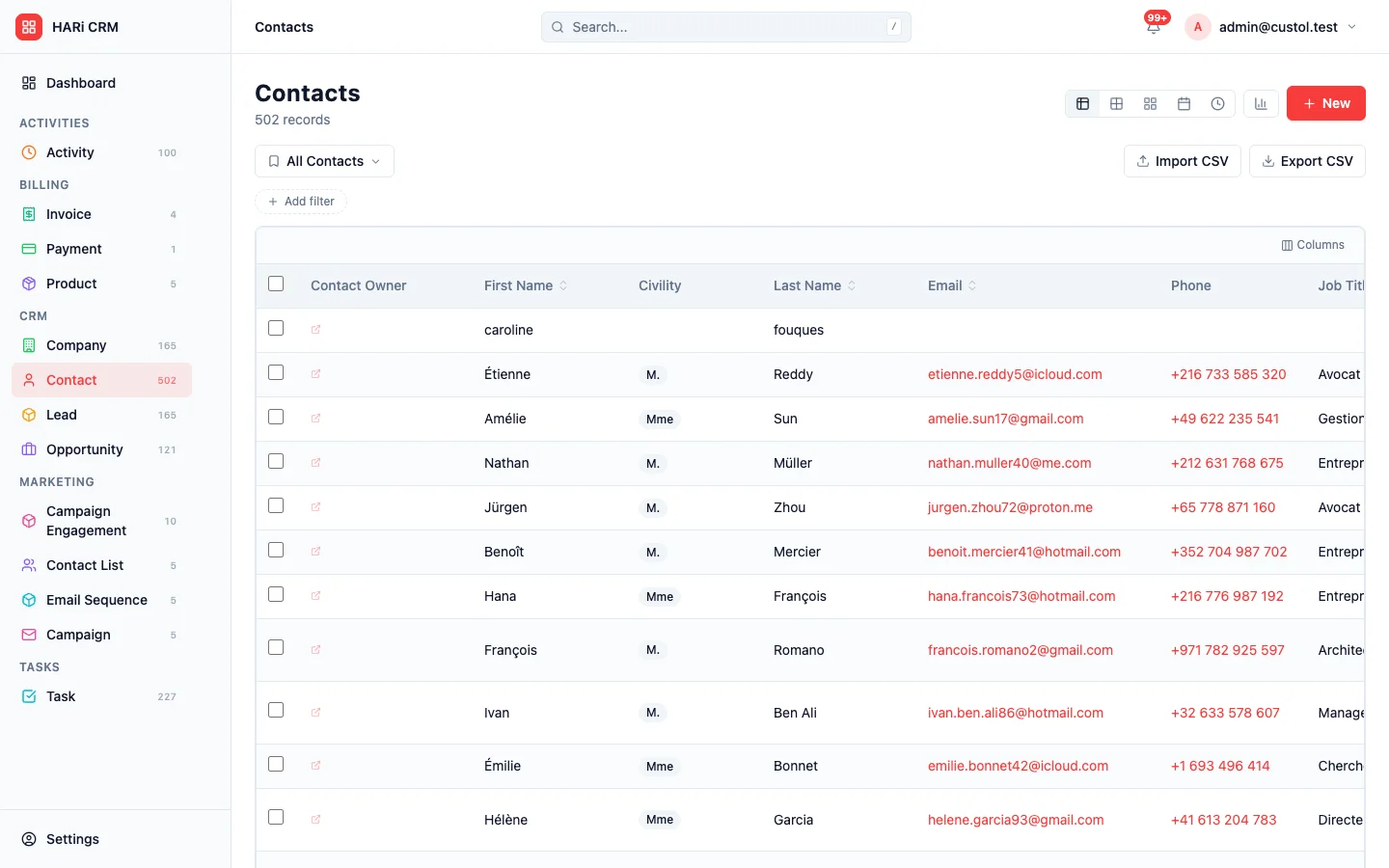
A CRM is not a booking system. Most salons and clinics already have one of those — FreeBookings, Fresha, or a custom app. A CRM sits alongside it and handles the relationship dimension: who your clients are, what they’ve received, when they last visited, and what the right next action is.
A complete client profile — not just a booking history. A CRM record for a client in a beauty or wellness business is more than appointments and payments. It includes their treatment preferences, any sensitivities or contraindications the team needs to know about, the products they’ve bought, and notes from previous sessions that help whoever is seeing them today give a genuinely personalised experience. When a client returns after two months away and the therapist already knows she prefers a firmer pressure and that she’s been trying to improve her skin texture since last year, the visit starts differently.
This is exactly what the high-end spas at the Four Seasons or Peninsula do as a matter of standard. A CRM lets a small independent salon in Mong Kok or Sai Ying Pun do the same — not because it costs money to be attentive, but because it costs nothing to record information.
Package tracking with automatic follow-up. If you sell packages of sessions, the most valuable thing you can do is track them in a system that tells you, in real time, which clients have sessions remaining and which are about to finish. When a client is on their fifth of six sessions, that is the moment to have a conversation about what comes next — not after their final session, when they’ve already decided. A CRM with a simple record for each package (purchased date, total sessions, sessions used, expiry if applicable) makes this visible every day.
A lapsed client pipeline you can act on. The most immediately valuable thing a CRM does for a beauty business is give you a list of clients who haven’t been in for 60 or 90 days. Right now, most salon owners know this number exists but can’t see it clearly. With a CRM, you can run that list on a Tuesday morning, look at who’s been quiet, and send personalised messages to a dozen people by lunchtime. Not a broadcast promotion — a specific message referencing their last treatment and offering something relevant.
Even a 10% recovery rate on lapsed clients is meaningful. If you have 50 clients who haven’t visited in 90 days and your average booking is HK$800, recovering 5 of them is HK$4,000 in revenue you otherwise wouldn’t have seen.
Post-treatment follow-up as standard practice. In aesthetics especially, the period after a treatment is when a client is deciding whether the results were good and whether they’ll come back. A simple check-in message two or three days after a laser session — asking how the skin is feeling, whether there’s any unexpected reaction — is both good clinical practice and a relationship touchpoint that competitors almost never do. In a sector where word of mouth and Google reviews drive a meaningful share of new business, clients who feel genuinely cared for are far more likely to recommend you.
A CRM with automated reminders lets you schedule this follow-up at the time of the appointment, so it happens regardless of how busy the front desk is that week.
Referral tracking for a referral-driven business. Beauty and wellness businesses in Hong Kong grow largely through referrals. A client who loves her facial studio tells her colleagues in her office in Central. Two of them make appointments. None of this is tracked. The original client is thanked verbally, if at all. The two new clients appear in the booking system as strangers.
Logging referral sources in a CRM — even just a field for “referred by” on each new client record — gives you data after six months that changes how you allocate your appreciation budget. If three clients have each referred four or five friends, those relationships deserve more than a generic thank-you. An acknowledgement that feels specific — “I noticed you’ve sent us quite a few friends this year, and we really appreciate it” — produces more referrals, because it tells the referring client that you see them and value the relationship.
The WhatsApp dimension
In Hong Kong’s beauty industry, WhatsApp is the primary communication channel. Appointment confirmations, rescheduling requests, product recommendations, and promotional messages all go through WhatsApp. This is not going to change — and it shouldn’t. WhatsApp is where clients are, and insisting they use a booking portal they’ve never opened is not the answer.
The problem is not WhatsApp itself. The problem is that WhatsApp conversations live in individual phones and are invisible to the rest of the team. When a client messages to ask about rescheduling, the therapist she messages might not be the one who handles bookings. When she asks a question about the product she bought, the answer might be in a chat with a staff member who has since left.
A CRM doesn’t replace WhatsApp — it gives you a place to log what matters. When a conversation results in a decision, a purchase, a rescheduled appointment, or a complaint, that outcome should be noted in the client’s record. Not the full transcript — just the relevant fact. Over time, this creates a client history that survives staff changes and means every team member can give a good answer regardless of who handled the last interaction.
Why per-seat pricing is the wrong model for salons
Beauty businesses have an unusual mix of people who need access to client records. The owner needs to see the full picture. The receptionist needs to check and update appointments and packages. Individual therapists need to see client notes before each session. A junior who covers the desk part-time might need basic access.
With per-user CRM software priced at HK$400 to 800 per person per month, a six-person team is spending HK$2,400 to 4,800 before the system has generated a single additional booking. That is a material cost for a business where therapist wages, rent, and product costs already put pressure on margins.
Flat-rate workspace pricing — one monthly rate for your entire team, regardless of headcount — makes far more sense. If a new therapist joins, they should have access to client records from their first shift without triggering a licence discussion. If business is slower in summer and you reduce hours, your CRM cost doesn’t change. The system becomes infrastructure, not a variable cost that scales against you.
This is how HARi CRM is priced: one flat monthly rate for your whole team. For a salon or clinic of four to ten people, this is typically a fraction of what per-seat vendors charge — and everyone who needs access to client records can have it from day one.
What to set up first
If you run a beauty salon, spa, or aesthetic clinic in Hong Kong and you haven’t used a CRM before, start with these three things — not with trying to build a perfect system:
First: import your existing client list. Every client you’ve had in the last 18 months, with their name, phone number, last visit date, and if you have it, what they usually come in for. If this is in a booking app, most will export to Excel. If it’s in a paper register, a half-day of data entry is worth it. This list is your starting point — the raw material for everything else.
Second: flag your lapsed clients immediately. Look at anyone who hasn’t been in for 90 days or more and create a simple follow-up task for each one. Not a mass broadcast — a personal message that references their last treatment. “Hi [name], it’s been a few months since your last facial — wanted to check in and let you know we have a few appointments available this week.” That message, sent to 20 people, will get three or four responses and recover bookings that would otherwise be permanently lost.
Third: set up package tracking for your next new package sale. When the next client buys a course of sessions, record it in the CRM — how many sessions, how many used, when the package expires if applicable. Set a reminder when they reach the second-to-last session. That reminder, appearing at the right moment, is the prompt for a renewal conversation that your competitor is not having.
That is a day’s work. The list, the lapsed-client pipeline, and the package tracking — these three alone change how visible your business is to you, and how consistent your client communication becomes.
What good looks like at twelve months
At three months: follow-up is happening after every treatment, and two or three lapsed clients have returned after targeted outreach. The receptionist and therapists are working from the same client records for the first time.
At six months: you have a clear view of which clients buy packages versus one-off treatments, which are most likely to refer, and which months drive the most bookings. That data starts to shape your promotions — rather than sending the same message to everyone, you’re reaching the right people with the right offer at the right time.
At twelve months: client retention is measurably higher. You can tell which clients have returned for a second course, which ones have been quiet for too long, and which ones have referred friends. The referral network you knew was there but couldn’t see is now visible — and you’re thanking the right people in the right way.
The beauty and wellness businesses that grow in Hong Kong’s competitive market are the ones that make every client feel remembered. A CRM doesn’t create that care — you and your team do. But it gives you the infrastructure to express that care consistently, not just when you happen to remember.
Try it for one month
The easiest test is to import your client list, identify your top 20 lapsed clients, and reach out to them personally over the next two weeks. Track who responds and who rebooks.
That is not a CRM exercise — it’s a revenue exercise. But a CRM is what makes it systematic rather than a one-time effort.
HARi CRM offers a free 14-day trial — no credit card required. Import your client list, set up a simple follow-up pipeline, and see what consistent client communication changes for your business.
Related reading:
- CRM for Restaurants and F&B in Hong Kong — how service businesses with repeat customers use a CRM to build loyalty
- The Problem with Per-Seat CRM Pricing — why flat pricing makes more sense for small teams with variable staff
- How to Move Your Contacts from a Spreadsheet to a CRM — practical guide to getting your existing client data into a system