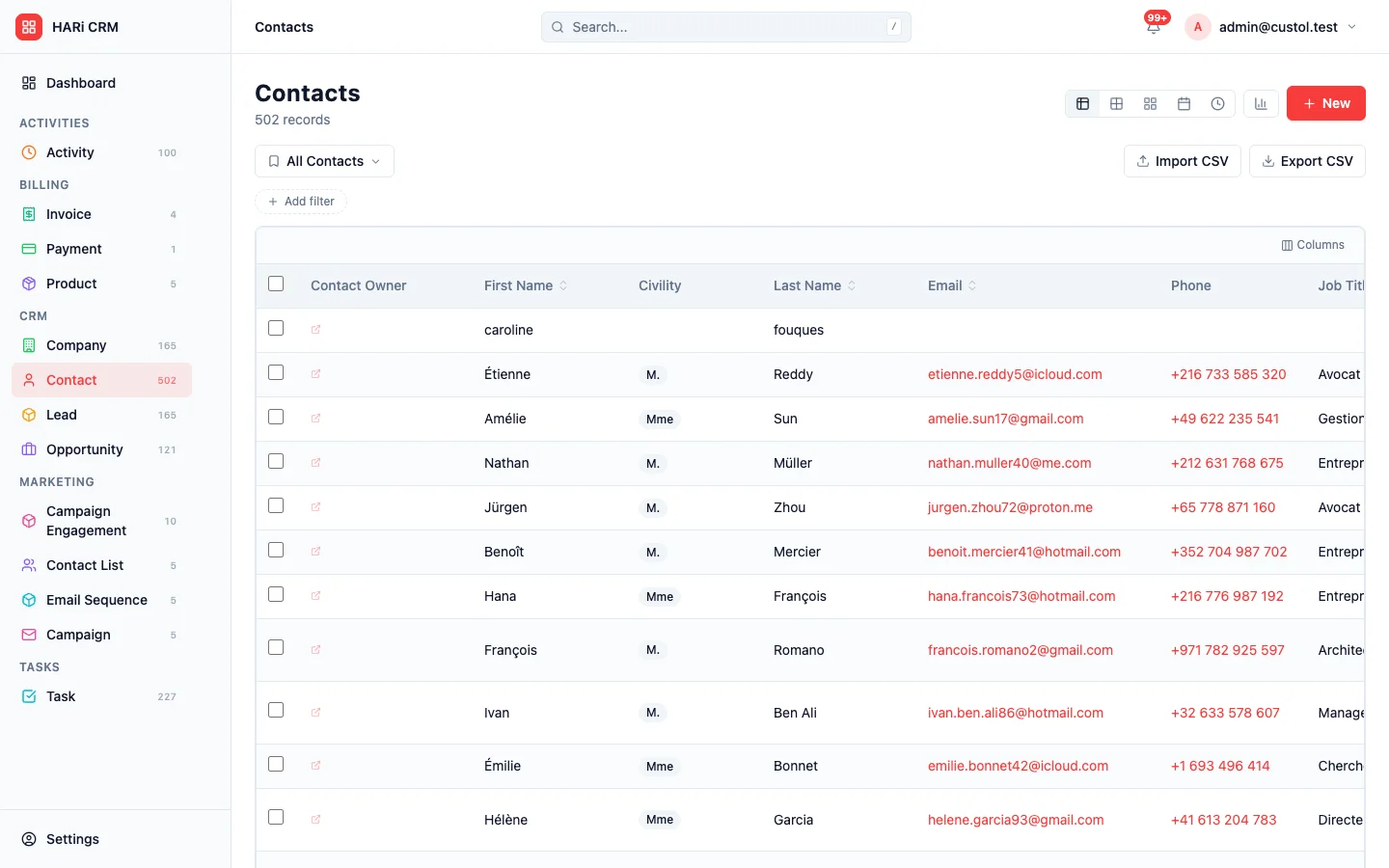
Hong Kong has one of the most competitive private education markets in the world. Alongside formal schooling, hundreds of thousands of students attend supplementary classes every week — Mandarin lessons in Tai Koo, maths tutoring in Tuen Mun, English enrichment in Tsim Sha Tsui, music lessons in Mong Kok. The 補習社 is a fixture of HK family life in a way that has no direct equivalent anywhere else.
Behind every thriving tutorial school is an owner who figured out something important: the hard part is not teaching. The hard part is managing the parent relationship — from the first trial class enquiry to the third year of continued enrolment.
Most education centres manage this with a combination of WhatsApp broadcasts, spreadsheets, and the owner’s memory. It works when you have 50 students. It stops working somewhere around 150, and it becomes genuinely dangerous for the business above 300.
The education centre business model and where it breaks
A mid-sized tutorial school in Kowloon might have 200 to 400 active students across different age groups and subjects. Each student has:
- A parent (or two) as the actual decision-maker and payer
- An enrolment in one or more courses
- A trial class history that led to their enrolment
- A renewal date — the moment the school needs to re-earn their business
- A progress record that informs conversations with parents
- A referral history — who introduced them, and whom they’ve referred in return
That is a web of relationships with real commercial consequences. A student who does not renew represents lost revenue. A parent who feels their concerns went unaddressed refers nobody. A lapsed family who had a good experience but drifted away is a winnable customer — if anyone notices they drifted.
Most education centres have no system to track any of this beyond a payment ledger and a WhatsApp group.
Three education centre owners, three familiar problems
The English enrichment school in Quarry Bay. Forty students in after-school classes, most of them primary age. The owner, Sophie, teaches herself and handles all parent communication personally. When a parent messages about a change in schedule, Sophie responds on her personal WhatsApp. When a student stops coming — as sometimes happens after a busy exam period — Sophie notices only weeks later when the payment doesn’t come in. By then the family has enrolled elsewhere.
Sophie knows she has a follow-up problem. She just doesn’t have time to fix it.
The STEM centre in Sha Tin. Three instructors, about 120 students across robotics, coding, and science classes. The admin coordinator, Amy, manages enrolments in an Excel sheet and confirms class bookings by WhatsApp. Every September and February — the two peak intake seasons — the centre is overwhelmed with trial class requests. Some get confirmed. Some are promised a callback that never happens. Some enquire, wait, and sign up with a competitor down the road.
Amy knows there are lost enrolments she cannot account for. She just cannot see them in the spreadsheet.
The music school in Tseung Kwan O. Piano, violin, and guitar. Thirty-five students, mostly children with parents as the communication point. The school’s owner, David, has three teachers. When a teacher leaves — which happens — David scrambles to reassign students and reassure parents. Every relationship that teacher had built is now in David’s hands, managed through memory and a phone he hopes the teacher hasn’t blocked.
David’s biggest business risk is not teaching quality. It is institutional knowledge living on other people’s phones.
What managing 300 students actually requires
Beyond a certain size, the volume of parent communication alone becomes unmanageable without a system. Consider what happens in a week for a 300-student education centre:
- Fifteen parents enquire about trial classes, through WhatsApp, Instagram, or a contact form
- Eight students are approaching their renewal date for the next term
- Three parents have questions about their child’s progress
- Two students have been absent for two weeks with no explanation
- One new family was referred by an existing student’s parent — they mentioned the referral in passing in a WhatsApp message
Without a system, five of those fifteen trial enquiries will not get a timely response. Three of the eight renewals will be handled only when payment does not arrive — a reactive conversation instead of a proactive one. The two absent students will be noticed only when another month passes. The referral will never be properly acknowledged, and the referring parent will not be thanked.
None of this requires bad intentions. It requires more than human memory can reliably handle.
What a CRM does for an education centre
A CRM for an education centre is not about sales funnels or deal pipelines in the traditional sense. It is about three things: tracking relationships, managing follow-ups, and retaining the students you already have.
A record for every family, not just every student. The parent is your customer. The student is who you serve. In most education centres, these are different people — the parent pays, communicates, and decides whether to renew. A CRM should link the student record to the parent record, so that when a parent calls, you can immediately see both children they have enrolled, their payment history, and the last conversation anyone at your centre had with them.
A pipeline for trial class enquiries. Every enquiry is a potential enrolment. Instead of managing trial class requests through WhatsApp messages and mental notes, each enquiry becomes a record: who enquired, how they heard about you, which subject and age group they’re interested in, which trial class they attended, and the outcome. Your follow-up after the trial class is not something you remember to do — it is a task in a queue, due two days after the class.
You can see at a glance how many enquiries are in progress, how many trial classes are scheduled this week, and how many follow-ups are overdue. That visibility alone changes how a business runs.
Renewal tracking before the payment stops. Knowing that a student’s current term ends in three weeks gives you time to have a positive conversation: how is the class going, what would the family like to continue with, is there a sibling who might benefit from a trial? Knowing it only when the payment stops turns a renewal into damage control.
A CRM lets you filter for students whose term ends in the next 30, 60, or 90 days. That filter is your proactive retention list. Work it every week and your renewal rate improves. Ignore it and you are always catching up.
Absence tracking that flags at-risk students. A student who has missed three classes without explanation is at risk of dropping out. In most centres, nobody notices until the parent WhatsApps to cancel. A CRM with simple attendance notes — not a complex school management system, just a flag on the record — lets you spot these patterns early and reach out with genuine concern rather than a payment reminder.
Referral tracking that tells you what’s working. Most education centres grow significantly through word of mouth. Knowing which families referred others, and thanking them properly, converts satisfied parents into active advocates. When you log where every new enquiry came from — referral, Instagram, building notice board, MTR poster — you also learn what marketing is actually working and what is not.
The WhatsApp problem in education
WhatsApp is unavoidable in HK education. Parents expect to be able to message the school directly. Teachers and centres communicate via WhatsApp groups for class updates, holiday notices, and schedule changes.
The problem is the same as in any service business: the relationship lives on a personal device.
When a parent messages your teaching assistant about a schedule change, that conversation exists only on that assistant’s phone. When the assistant leaves — and staff turnover in private education is real — the conversation history, the parent’s preferred contact time, the note about the student’s learning difficulty that the parent mentioned once in passing — all of that disappears.
The answer is not to move all communication off WhatsApp. That is not realistic in HK. The answer is to log the information that matters — not every message, but the meaningful ones — into a shared system where any staff member can see context before responding.
A parent who calls your centre for the third time and has to re-explain the same situation each time is a parent who is already thinking about switching. A parent who calls and is greeted with “I can see we spoke last week about James’s Tuesday class — has that been resolved?” is a parent who feels their child is in good hands.
Pricing that makes sense for education centres
Most education centres are not flush with cash. Margins are squeezed by rental costs in any accessible HK location, teacher salaries, and the constant pressure to keep fees competitive. Software that charges per user per month makes little sense — you have owners, admins, and teachers who all need to see student records, but you’re not going to pay four or five separate seats for a small team.
Flat-rate pricing that covers your whole operation — regardless of how many staff access the system — is the model that works for education. One monthly cost, everyone in the system, no mental gymnastics about who gets a seat and who doesn’t.
This is how HARi CRM is priced: one flat monthly rate for your whole team. An education centre with six teachers and two admin staff pays the same as one with two teachers. If you hire a temporary admin for September intake season, they can be in the system too — no extra cost.
Getting started without disrupting your classes
The fear with any new system is that setup takes longer than it should and disrupts the team during teaching time.
In practice, an education centre can be up and running with the basics in half a day:
Step one: import your student list. Start with your current enrolled students — name, parent name, parent contact, current subject and class, next renewal date. This is your most valuable data. If it is in a spreadsheet, it can be imported in minutes. If it is in WhatsApp contacts and a notebook, budget an afternoon.
Step two: create a pipeline for trial class enquiries. From this point forward, every new enquiry becomes a record: who enquired, when, how, what they’re interested in, and what the next step is. After every trial class, the record gets updated with the outcome. You will see your conversion rate from trial to enrolment for the first time — and you will likely be surprised.
Step three: flag your upcoming renewals. Filter for students whose current term ends in the next 60 days. That is your retention priority list. Assign a follow-up task for each one — a personal message from the teacher, a call from the admin, a note about what the next term’s course covers and why it is right for this student.
That is the foundation. Everything else — referral tracking, attendance notes, parent communication logs — can be added as habits form.
What changes when the system works
The effects of a working CRM in an education centre are not dramatic. They accumulate over six to twelve months.
Trial class conversion improves because follow-ups happen consistently. Renewal rates improve because families are contacted proactively rather than reactively. Staff changes become manageable because institutional knowledge lives in the system, not in people’s phones. The owner spends less time firefighting — answering “did anyone follow up on that Sha Tin enquiry?” and more time on what actually grows the business.
Most importantly, the business stops being fragile. An owner who can leave the centre for a day without worrying that something will fall through the cracks is an owner running a real operation, not one person holding everything together through sheer availability.
That transition — from personal effort to systematic operation — is what makes the difference between an education centre that plateaus at 150 students and one that grows to 500.
Start with a free trial
HARi CRM is built for small teams in Hong Kong. Import your student list, set up a trial class pipeline, and see what systematic follow-up does to your conversion rate. One flat price for your whole team — no per-seat fees that penalise you for adding staff.
If you are still managing parents through WhatsApp broadcasts and your renewal tracking is a calendar reminder you sometimes miss, it is worth 14 days to see what changes.
Related reading:
- Why Hong Kong SMEs Need a CRM in 2026 — the broader case for systematic relationship management in the HK market
- How to Move Your Contacts from a Spreadsheet to a CRM — practical guide to importing your existing student and parent data
- The Problem with Per-Seat CRM Pricing — why flat pricing matters when your whole team needs access