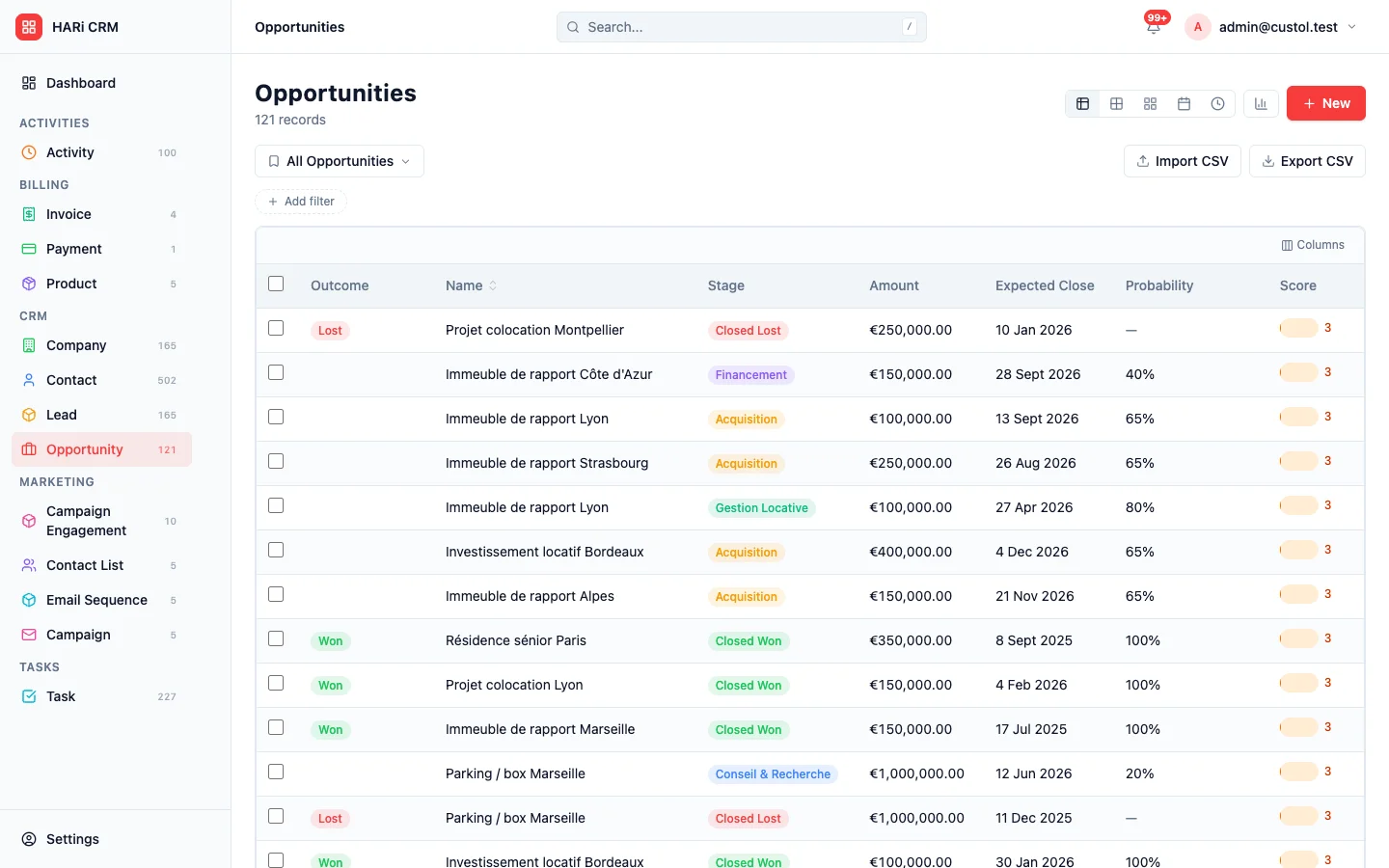
Recruitment in Hong Kong is a relationship business run on speed. A client calls with an urgent headcount. You scan your memory, WhatsApp threads, and maybe a spreadsheet to think of who might fit. You send a few CVs, chase the candidate by phone, coordinate interviews across three diaries, and hope the placement closes before the client goes to a competing agency.
When it works, it feels effortless. When it doesn’t — when a good candidate slips away because nobody followed up, when a client complains they sent the brief two weeks ago and heard nothing, when a consultant leaves and takes half their candidate database with them in their head — you feel the cost immediately. In recruitment, lost momentum is lost revenue.
Most small agencies in Hong Kong operate without a proper system. They have spreadsheets for tracking candidates, WhatsApp for client communication, email for CV submissions, and a shared drive (maybe) for job descriptions. The information exists, but it lives in five different places and nobody can see the full picture at once.
That is exactly the problem a CRM solves.
What makes recruitment in Hong Kong different
Hong Kong’s recruitment market has characteristics that make relationship management unusually important — and unusually difficult to do well without a system.
High consultant turnover. Recruitment agencies have some of the highest staff turnover rates of any professional service. When a consultant leaves, their candidate relationships, client rapport, and pipeline knowledge often leave with them. If that knowledge lived only in their WhatsApp messages, personal email, and memory, it is gone. The next consultant starts from scratch with clients who expected continuity.
WhatsApp as the primary channel. In Hong Kong, business communication runs on WhatsApp far more than email. Candidates confirm interview times on WhatsApp. Clients send job briefs over WhatsApp. Salary negotiations happen in voice notes. This is efficient for the individual consultant — but it means critical business information is locked inside personal chat histories that belong to no one but the person holding the phone.
Compliance pressure. The Employment Ordinance and the Personal Data Privacy Ordinance (PDPO) both affect how agencies handle candidate information. You hold names, HKID numbers, salary histories, references, and sometimes health-related data. Under PDPO, candidates can request to know what data you hold about them and ask for it to be deleted. If that data is scattered across WhatsApp, email, Google Drive, and a consultant’s personal laptop, responding to a data access request is an exercise in frustration — and a compliance risk.
Speed determines who wins the fee. In contingency recruitment, the agency that presents the best candidate fastest typically wins the placement. A one-day delay in submitting a shortlist can mean the client has already seen five candidates from three other agencies. Any system that slows you down is a liability. Any system that helps you find the right candidate faster is a competitive advantage.
Three agencies, three familiar problems
The generalist agency in Tsim Sha Tsui. Angela runs a six-person agency covering admin, finance, and operations roles. Her team uses a shared Google Sheet to track open job orders — one row per job, columns for client name, role title, candidates submitted, interview dates, and status. The sheet has 340 rows and growing. Finding which candidates were submitted for which role three months ago requires scrolling and guessing. When a client calls to ask about a role they posted in January, Angela has to search her email for the original brief, check the spreadsheet for submission notes, and ask the consultant who handled it — who may or may not remember the details.
The IT recruiter in Quarry Bay. David specialises in technology roles — developers, project managers, cybersecurity. His candidate database is an Excel file with 2,800 names collected over eight years. He knows the file well enough to search it by keyword, but there is no reliable way to see a candidate’s full history: which roles they were submitted for, which interviews they attended, whether they declined an offer two years ago and why. When a candidate calls to say they are open to new opportunities, David sometimes submits them for a role they already rejected — because the history is not recorded anywhere searchable.
The headhunter partnership in Central. Two partners, Fiona and James, focus on mid-to-senior finance and legal roles. Their business depends on long-term relationships with both candidates and clients. Fiona keeps meticulous notes — but in her own Notion workspace that James cannot access. James relies on memory and his phone’s contact list. When Fiona is on leave, James cannot see her pipeline. When a retained client asks for a progress update, the response depends on which partner the client calls. There is no single view of the firm’s business.
What a CRM actually does for a recruitment agency
A CRM designed for recruitment is not a fancy address book. It is the system that connects candidates, clients, job orders, and placements into one view — so that every member of your team can see the full picture at any time.
One record per candidate, with full history. Every candidate has a profile that shows their skills, experience, salary expectations, availability, and — critically — every interaction your agency has had with them. Which roles were they submitted for? Did they get to interview stage? Why did they decline the last offer? When was the last time someone from your team spoke to them? This history stays with the agency, not with the consultant who happened to make the call.
One record per client company, linked to contacts and job orders. Your client is not just a company name — it is a set of relationships with hiring managers, HR contacts, and decision-makers. A CRM tracks who you know at each company, what roles you have filled for them, which consultants have the relationship, and when the last conversation happened. When a new job order comes in, you immediately see the full context: past placements, preferred candidate profiles, fee agreements, and any issues from previous searches.
Job order pipeline with stages. Every open role moves through a pipeline: brief received, candidates sourced, shortlist submitted, interviews scheduled, offer stage, placement confirmed. You can see at a glance how many roles are at each stage, which ones are stalling, and where your team should focus today. No more scrolling through a spreadsheet to figure out what needs attention.
Candidate-to-job matching. When a new job order arrives, you need to quickly identify candidates who match the requirements. A searchable candidate database — filtered by skills, experience level, industry, availability, and salary range — replaces the “Who do I know?” guessing game. Instead of relying on one consultant’s memory, you search your entire agency’s candidate pool.
Automated follow-ups and reminders. A candidate who said “call me in three months” should get a call in three months — not four months later when you stumble across their name. A client who has not had an update in ten days should trigger a reminder to the assigned consultant. These follow-ups are the difference between an agency that feels attentive and one that feels disorganised.
Activity logging for compliance. Every call, email, meeting, and CV submission is logged against the candidate and the job order. When a candidate exercises their PDPO right to know what data you hold, you can generate a clear record. When a client disputes a fee because they claim the candidate was introduced by another agency, you have timestamped evidence of your submission.
What to look for in a recruitment CRM
Not every CRM is built for recruitment. Generic tools like Salesforce or HubSpot can be configured to work, but they require significant setup and cost. Here is what actually matters for a small recruitment agency in Hong Kong.
Candidate and client as separate but linked entities. You need two distinct databases — one for candidates, one for client companies — with the ability to link them through job orders and placements. A CRM that treats everyone as a “contact” forces you into workarounds that break down at scale.
Pipeline visibility. You should be able to see all open job orders in a pipeline view, drag roles between stages, and immediately spot which searches are stuck. If the CRM only shows you a flat list of records, it is not designed for recruitment workflow.
Search and filter that works. You will search your candidate database constantly. The search needs to be fast, accurate, and support filtering by multiple criteria: industry, function, years of experience, salary range, location, availability. If finding the right candidate takes more than 30 seconds, consultants will go back to their personal spreadsheets.
Activity tracking without extra effort. Logging calls and meetings should take seconds, not minutes. If updating the CRM after every interaction feels like paperwork, your team will stop doing it — and the system becomes useless.
No per-seat pricing. Recruitment agencies have fluctuating headcount. Consultants join, leave, and sometimes come back. Interns and researchers need system access for a few months. A CRM that charges per user punishes you for giving your team the access they need. At HK$200-500 per seat per month, a six-person agency pays HK$1,200-3,000 monthly just for access — before any value is delivered.
Data stays in your control. Your candidate database is your agency’s most valuable asset. The CRM must let you export your data at any time, in a standard format. You should never be locked into a vendor because migrating away would mean losing years of candidate history.
WhatsApp compatibility. In Hong Kong, any CRM for recruitment must acknowledge that WhatsApp is where half your conversations happen. At minimum, the CRM should let you log WhatsApp interactions against candidate and client records. Ideally, it should integrate with WhatsApp Business so that messages are captured automatically rather than requiring manual logging.
How HARi fits recruitment agencies
HARi is built for small professional teams in Hong Kong. The platform is metadata-driven, which means you can set up candidate tracking, client management, job order pipelines, and placement records without needing a developer or a consultant to configure it for you.
Flat pricing at HK$1,990/month for your entire team. No per-seat charges. Whether you have three consultants or twelve, the cost is the same. Add a researcher for three months? No extra fee. Bring on a temp admin to help during peak season? They get access without a pricing conversation.
Candidate and company entities with full relationship tracking. Set up your candidate database and your client database as separate entities, linked through job orders. Every interaction — calls, emails, CV submissions, interview feedback — is logged against the right record and visible to the whole team.
Customisable pipelines for job orders. Create pipeline stages that match your actual workflow: sourcing, shortlisted, submitted to client, interview arranged, offer stage, placed, invoiced. Move job orders through stages with a drag, and see your entire active pipeline at a glance.
PDPO-ready data management. All candidate data lives in one system with role-based access control. When a consultant leaves, you deactivate their account — their candidate records and history stay with the agency. When a candidate requests data access or deletion, you handle it from one place instead of searching five systems.
Built for Hong Kong business culture. WhatsApp integration is on our roadmap — we understand that a recruitment CRM that ignores WhatsApp is ignoring how Hong Kong actually works. In the meantime, logging WhatsApp interactions against candidate records takes a few clicks, keeping your team’s institutional knowledge in one place.
What changes when you switch from spreadsheets
The shift from spreadsheets to a CRM in recruitment is not about technology. It is about whether your agency’s knowledge belongs to the agency or to individual consultants.
In the first month, the main change is visibility. You can see all open job orders, all active candidates, and all recent interactions in one place. The time spent asking “Where are we on that role for XYZ Company?” drops to zero — anyone can look it up.
By three months, the follow-up discipline improves. Candidates who said “call me later” actually get called. Clients who have not received an update in a week get one. The agency starts feeling more responsive — because it is.
By six months, the compound effect becomes clear. When a new job order arrives, you search your candidate database and find people who were sourced for a similar role eight months ago. Candidates who were not right for one role are perfect for another. Your past sourcing effort stops being wasted and starts feeding future placements.
And when a consultant leaves — which, in recruitment, is a matter of when, not if — the agency retains everything they built. Their candidate relationships, client notes, and pipeline status are in the system. The replacement consultant picks up where they left off instead of starting from zero.
Start with a free trial
HARi CRM is designed for small teams in Hong Kong who need to manage relationships without drowning in admin. Set up your candidate database, build your job order pipeline, and see your agency’s full picture in one place.
If your candidates live in a spreadsheet and your client updates live in WhatsApp, 14 days is enough to see the difference.
Related reading:
- CRM for Professional Services in Hong Kong — how service professionals manage long-term client relationships
- The Problem with Per-Seat CRM Pricing — why flat pricing matters when your whole team needs access
- WhatsApp and CRM in Hong Kong — why WhatsApp integration matters for Hong Kong businesses