Hong Kong is one of the most competitive retail environments on the planet. Every MTR exit has a chain pharmacy, a fashion brand, or a electronics shop fighting for the same foot traffic. Online, your products compete with Taobao listings priced at a fraction of your cost.
The only reliable advantage an independent retailer has is relationships.
The customer who bought from your Central jewellery boutique three times is worth ten new customers who found you on Google. The regular who WhatsApps you when new stock arrives doesn’t care if Sasa has a 20% sale — she trusts you. But building and keeping those relationships requires a system. Excel and WhatsApp groups are not that system.
This is where a CRM comes in. Not the enterprise CRM designed for a 100-person software sales team — a simple, practical tool that helps a 5-person retail operation treat every returning customer the way a good shopkeeper has always treated them: as a person, not a transaction.
The retail problem: you know your regulars, but your system doesn’t
Ask any good shop owner in Tsim Sha Tsui or Sheung Wan, and they’ll describe the same challenge. They know their regulars by face. They remember that Mrs Chan prefers jade over diamonds. They know that Mr Leung always comes in before Chinese New Year to buy gifts for business partners. They remember who referred whom.
But that knowledge lives in one person’s head. When that person isn’t in the shop, it’s gone. When they leave, they take it with them.
Retail businesses with more than two or three staff run into this constantly:
- A customer comes in looking for a product she enquired about last month. The staff member she spoke to is off today. Nobody knows what was discussed.
- A regular emails the shop asking about stock. The staff who replies doesn’t know he bought the same item twice before and returned it — so they recommend it again.
- A VIP customer hasn’t been in for three months. The shop has no system to notice this or reach out.
These aren’t problems that require a big technology investment to solve. They require one thing: a shared, searchable record of who your customers are and what they’ve bought.
What retail CRM actually looks like in practice
A CRM for a Hong Kong retail business isn’t about sales pipelines or lead funnels. It’s about three things: knowing your customers, tracking what they care about, and staying in touch without being annoying.
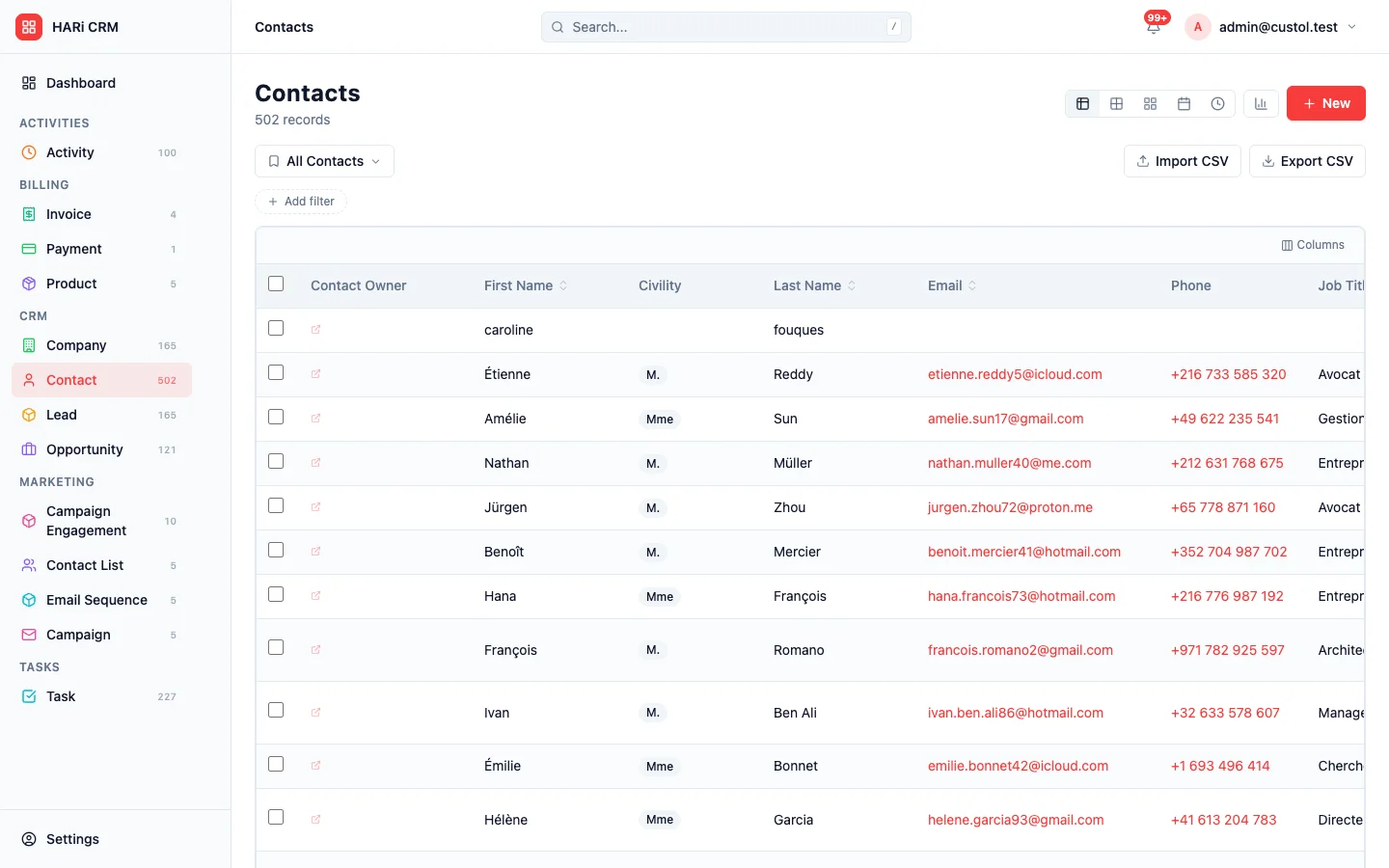
Customer profiles that your whole team can see. When a regular walks in or sends a WhatsApp, any staff member should be able to pull up their record in 20 seconds. Name, purchase history, preferences, last contact, any notes (“prefers English”, “size 38”, “allergic to nickel”). Not because you’re being creepy — because you’re being professional.
Purchase history without a POS integration required. You don’t need your CRM to replace your point-of-sale system. You need it to capture the meaningful purchases — the big-ticket items, the gift orders, the special requests. A staff member can log “bought the HK$3,800 silk scarf, gift for her sister’s wedding” in thirty seconds. That note is worth more than a line item in a sales report.
Follow-up reminders that actually work. A customer buys a skincare set. You set a reminder for six weeks later to check in — “Is the moisturiser running low?” You’re not spamming them. You’re being helpful at the right moment. Without a system, that follow-up never happens. With one, it becomes a habit across your whole team.
Groups and tags for targeted outreach. Not all customers are the same. A small boutique in Wan Chai might tag customers as “VIP”, “seasonal”, “gift buyer”, or “online only”. When new stock arrives that suits VIP customers, you can message just them — not blast your entire contact list with something irrelevant. This is the difference between a message that feels personal and one that feels like a spam campaign.
The WhatsApp gap
Every retail business in Hong Kong runs customer communication through WhatsApp. New arrivals get announced in broadcast lists. Loyal customers message directly asking to reserve items. Service after the sale happens through WhatsApp.
The problem: all of that lives on personal phones.
When your senior staff member is the one running the customer broadcast list from her personal WhatsApp, she owns your customer relationships — not you. When she leaves, those conversations and contacts leave with her. You may even be in breach of PDPO (Hong Kong’s Personal Data Privacy Ordinance) if customer data is sitting on personal devices with no access controls.
A CRM with proper channel management means incoming WhatsApp enquiries get logged to the right customer record, regardless of which staff member received them. The conversation history belongs to your business, not to one person’s phone.
This matters more than most retailers realise until they face it. A 10-person boutique in Causeway Bay that had been trading for eight years lost three months of customer conversations when their top salesperson resigned and took her WhatsApp contacts with her. The customers she’d been nurturing for an exclusive product launch simply never heard from the shop again — because no one else knew who they were.
Why per-seat pricing doesn’t work for retail
Most CRM software charges per user per month. At HK$400-1,200 per user per month for a decent system, a 6-person retail team is looking at HK$2,400-7,200 every month — before they’ve sold a single item.
For a retailer operating on 30-40% margins in an expensive rental environment, that math doesn’t work.
What retailers actually need: one flat price that covers the whole team. Part-time staff, the shop manager, the owner who checks in remotely — everyone should be able to see the customer record without the business paying an extra seat every time.
Workspace pricing is how HARi CRM works. One monthly price for your whole team. If you add a part-timer for the Golden Week rush, you don’t pay more. If you want to give the owner read-only access to see how the business is running, it doesn’t cost extra. Everyone who touches customers should be in the system.
Real scenarios: how a Hong Kong retailer uses this
Consider a 4-person independent cosmetics boutique in Sham Shui Po that specialises in Korean and Japanese brands not widely available in chain pharmacies.
Scenario 1: The returning customer. A regular customer, Winnie, comes in on a Tuesday when the owner is at a buying appointment in Mong Kok. She asks the junior staff about the new sunscreen that was mentioned in the shop’s Instagram post. The staff member opens HARi, finds Winnie’s record, and can see that she bought a different SPF product six months ago and had a mild breakout from it — a note the owner added at the time. The staff member avoids recommending the same brand. Winnie leaves happy. The owner didn’t have to be there.
Scenario 2: The VIP outreach. The boutique tags its 40 highest-spending customers as “VIP”. When a limited-edition product arrives — only 15 units — the owner sends a personal WhatsApp message to VIPs first, before posting on Instagram. Twelve units sell before the post goes live. VIPs feel special. They tell their friends.
Scenario 3: The lapsed customer. The system shows that 23 customers who bought in November haven’t been back since. The owner filters this group and sends a personalised message in February, timed around Valentine’s Day gift season. Eight of them come back. Three make purchases above HK$1,000. None of this required an advertising budget.
Scenario 4: The complaint turned loyalty. A customer returns a product with a defect. The staff logs it in the CRM, and the owner follows up the next day with a personal message apologising and offering a small gift. The customer posts about it on Xiaohongshu. The shop gains 200 new followers that week. Because the complaint was logged in the CRM, the owner knew about it even though she wasn’t in the shop when it happened.
What to set up first
If you run a retail business in Hong Kong and you’re starting with a CRM for the first time, don’t try to do everything at once. Start with three things:
1. Import your existing contacts. Start with your WhatsApp contacts, your email enquiries from the last year, and any VIP list you’re already managing manually. Import them into the CRM, add basic tags, and make sure your whole team can see them.
2. Set up a simple purchase log. You don’t need to migrate your entire POS system. Just agree on what’s worth logging: any purchase over a certain value, any special order, any return or complaint. Make logging a 30-second habit for your team, not a chore.
3. Create two segments. Tag your VIPs (anyone who has bought more than twice, or spent above a threshold). Tag your lapsed customers (bought once, not returned in 90 days). Those two segments are the highest-value outreach targets you have. Message them with something relevant before you spend a cent on advertising.
That’s a half-day of setup. The value compounds from there.
PDPO and customer data: what retailers need to know
If your shop collects customer names, phone numbers, or purchase history — you’re handling personal data under the PDPO. This applies even if you only store it in WhatsApp.
Two practical points for retailers:
First, customers can ask you what data you hold on them. If it’s spread across personal phones, WhatsApp groups, and various Excel files, you can’t answer that question. A CRM gives you a single place where all data lives — making compliance straightforward.
Second, if a staff member leaves, you need to ensure their access to customer data is removed. With a proper CRM, you deactivate their account in 30 seconds. With WhatsApp on their personal phone, you have no control.
This isn’t a reason to avoid using customer data — it’s a reason to use it properly, in a system designed for it.
The alternative
The alternative to a CRM isn’t some other system. It’s the current state: conversations living on personal phones, VIP relationships known only to one person, follow-ups that never happen, and opportunities lost because nobody noticed a good customer stopped coming in.
Hong Kong retail is too competitive for that. The chains have loyalty programs, data analytics, and teams of people working on customer retention. Independent retailers compete on relationships — but only if those relationships are actually managed.
A CRM doesn’t replace the personal touch that makes an independent shop worth visiting. It makes that personal touch possible even when the owner isn’t in the room, even when staff changes, and even when you have 500 customers instead of 50.
Start with a free trial
HARi CRM is built for small teams in Hong Kong. Flat pricing — one price for your whole team. Import your contacts in 10 minutes. No consultant required.
If you’re still managing your best customers through WhatsApp groups and memory, it’s worth 14 days to see what changes.
Related reading:
- Why Hong Kong SMEs Need a CRM in 2026 — the broader case for CRM in the HK market
- The Problem with Per-Seat CRM Pricing — why flat pricing matters for small teams
- How to Move Your Contacts from a Spreadsheet to a CRM — practical import guide