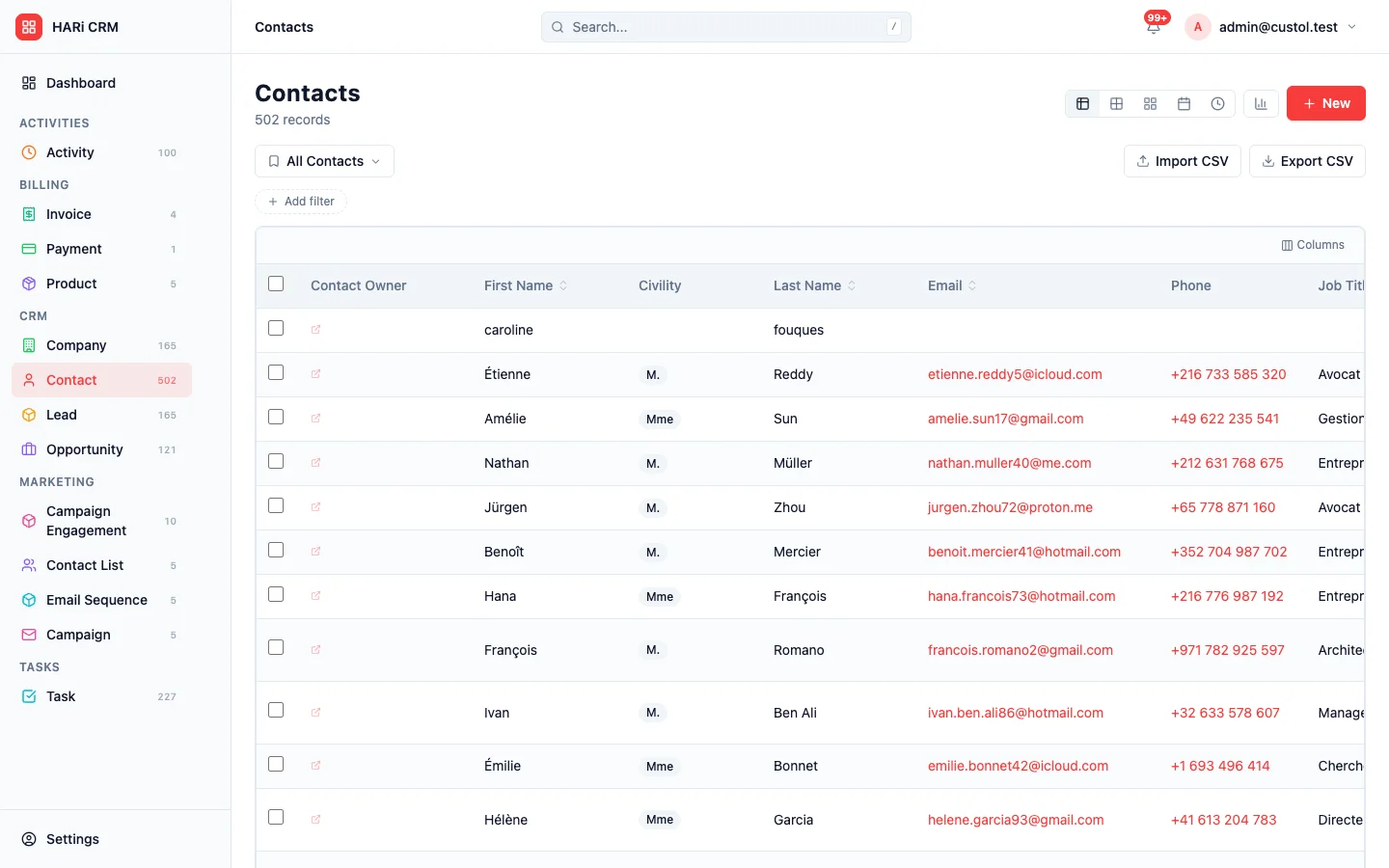
It is 3:40 on a Thursday afternoon and you are Ms. Ng, one of two partners at a small solicitor practice on Johnston Road in Wan Chai. You have forty-seven open matters. A conveyancing completion is in the calendar for 9:30 tomorrow — you still need to confirm the cashier order is with the bank. Two new enquiries came in this morning through a referral from an accountant in Sheung Wan, neither has been conflict-checked yet. An overdue stamp duty filing on a property transfer from last week is sitting on your junior’s desk. A client sent a WhatsApp two hours ago about a shareholder dispute you have not replied to. And your junior associate has just walked in holding a paper file asking whose email thread has the latest draft of the sale and purchase agreement for the Taikoo Shing transaction.
You are not short of work or technical ability. You are short of a way to manage the relationships and the administration around the legal work without dropping a matter, missing a conflict, or forgetting which draft is current. The law is the easy part. The administration around the law is where every small firm in Hong Kong quietly bleeds margin.
Why generic CRMs do not fit a small law firm
Most CRM products were built for sales teams. Lead, qualified, proposal, closed won. For a boutique solicitor practice that mental model is almost exactly wrong. A small HK law firm does not need a sales funnel. It needs a system that manages an existing population of clients across years of recurring matters, referrals, and regulatory obligations. New client acquisition is occasional and almost entirely by referral. The real work is managing the matters, conflicts, AML reviews, and communication trail around clients you already have.
A small HK solicitor practice also has a client structure that generic CRMs cannot model cleanly. A single long-standing client is often a director who owns three holding companies and a trading entity, and who brings in personal work on the side — a divorce, a flat in Kennedy Town, a will for his parents. The director is the relationship. The companies and personal matters are the engagements. A CRM that insists one record equals one company will force you to fight it every day.
The four pains of running a small Hong Kong solicitor practice
Conflict of interest checks are slow and rarely documented. Under Rule 2.03 of the Solicitors’ Practice Rules, every new matter requires a conflict check against the firm’s existing clients and matters. In a small practice this is usually done from memory, or by asking the other partner “does the name Mr Cheung ring a bell?”, or by scrolling an Excel sheet. It takes thirty to forty minutes, it is rarely documented, and it is the most common way a small firm exposes itself to a conduct complaint. A CRM with full-text search across every contact, company, and matter field turns a thirty-minute memory exercise into a thirty-second search with a timestamped audit trail.
Matter files are scattered across the file server, email, and WhatsApp. The classic “whose inbox has the latest draft” problem. The junior sends a redline by email. The client replies on WhatsApp. Opposing solicitors upload to a shared drive. By completion day, nobody is entirely sure which file is current. A CRM does not replace your document management — but it holds a single timeline per matter showing every client communication touchpoint, who sent what when, and who replied. The documents stay in your existing file server. The conversation around the documents lives in one place.
AML/KYC reviews have ongoing cycles nobody remembers. Under the Anti-Money Laundering and Counter-Terrorist Financing Ordinance (AMLO) and the Law Society’s AML Practice Direction, solicitors acting in property, company formation, and trust and estate matters are “designated non-financial businesses and professions” with full customer due diligence obligations. That means initial KYC at onboarding and periodic review of higher-risk clients. Most small firms do the initial KYC well and quietly forget the review cycle. A CRM with a workflow engine schedules the review automatically — “Re-verify KYC for Client X — due 2027-06-14” — so the obligation surfaces on the partner’s dashboard the week it matters.
Referral sources are the lifeblood of the firm, and almost invisible. Small HK law firms grow almost entirely through referrals — from accountants, real estate agents, banks, other lawyers, and satisfied clients. Ask any boutique firm’s managing partner which five referrers drove the most revenue last year and the honest answer is a shrug. Meanwhile, under AMLO, you are already required to record third-party introducers for due-diligence purposes — the data point exists, it just never flows into any system that tells you who to invite for lunch before Chinese New Year.
The honest difference between HARi and practice management software
This matters enough to spell out before anything else.
Full-stack legal practice management software covers matter management, document assembly, time capture, billing, trust accounting, and court calendars. These are mature, excellent products. A firm already running one is not missing anything a CRM would add — HARi would be redundant.
HARi is the relationship layer. It handles the WHO (clients, prospects, referrers, opposing counsel, introducers) and the WHEN (conflict checks, AML reviews, follow-ups, recurring touchpoints). It does not handle the HOW of running a legal matter — no document assembly, no time recording, no trust ledger, no court diary.
The right fit is the overwhelming majority of 2-8 person HK solicitor practices currently running on Excel, Google Contacts, Outlook, and a shared file server. HARi gives them the relationship and follow-up infrastructure without forcing a migration to a full-stack legal platform they may not need yet. A middle case also works: keep HARi as the front-of-house layer, keep the existing file server and billing spreadsheet, upgrade to full practice software later when the firm is ready.
How a CRM actually changes the daily work of a small firm
Thirty-second conflict checks with an audit trail. A new client walks in. The paralegal types the individual and corporate names into one search field. HARi returns every existing contact, company, and matter where that name appears, no matter which partner handled it or how many years ago. The result is timestamped and saved against the new enquiry. Under Rule 2.03 scrutiny, documented process matters as much as the outcome.
A matter-level activity timeline alongside the document store. Every email, phone call, meeting note, and WhatsApp message gets a one-line entry on the matter record. Not the document — the document stays where it already lives. Only the communication and its outcome. Three weeks later, when a partner is asked “what was the last thing we told the client about the completion date?”, the answer is one screen away instead of a ten-minute inbox search.
AML review reminders that fire themselves. On onboarding, the client is tagged with an AML risk rating and a review frequency (twelve, twenty-four, or thirty-six months depending on risk). HARi’s workflow engine creates the recurring review task automatically and surfaces it on the partner’s dashboard two weeks before it is due.
Referral sources captured on every first contact. One required field on intake: “How did you hear about us?” — referring accountant, referring solicitor, introducing bank, or previous client. Twelve months later, the firm can see that Mr Fung at a CPA practice in Central introduced eleven new matters, and three loyal clients have each referred four or more friends. The thank-yous start going to the people who actually drive growth — and the AMLO-required introducer register is a natural by-product of the same data.
Three Hong Kong practices, three realistic setups
The conveyancing boutique in Sheung Wan. Two partners and a paralegal, fed by referrals from property agents in Sheung Wan and Mid-Levels. Setup: a contact record for every agent who has ever referred a deal, a matter record per transaction with property address and completion date, and a workflow that reminds the paralegal two weeks before completion to confirm the cashier order. Top five agents get a thank-you lunch after every quarterly referral report.
The family practice in Causeway Bay. A solo partner, a paralegal, and a part-time secretary, doing divorce, child custody, and estate work in English and Cantonese. Setup: client records with dual-language preference tagged, a matter timeline per file (family matters run for months with long quiet periods between hearings), and follow-up reminders so no client sits forgotten between court dates.
The commercial boutique in Central. Three partners, an associate, and two paralegals doing SME corporate work — company formation, shareholders agreements, commercial contracts, trust structures. Setup: client director records linked to multiple corporate entities, AML reviews on a twenty-four-month cadence for higher-risk clients, and a monthly dashboard of dormant clients not touched in ninety days so the firm can send a light-touch note before the relationship fades.
The Hong Kong regulatory context
A solicitor practice in Hong Kong operates inside a specific statutory environment, and any system holding client information has to respect it.
The Law Society and the Legal Practitioners Ordinance (Cap. 159). Solicitors are regulated by the Law Society of Hong Kong under the Legal Practitioners Ordinance. The Hong Kong Bar Association regulates barristers separately — Hong Kong preserves the split profession. The Solicitors’ Practice Rules, the Solicitors’ Accounts Rules, and the Law Society’s Practice Directions set the conduct, client-money, and conflict framework every small firm must follow. Rule 2.03 of the Practice Rules governs conflicts of interest: a documented, searchable conflict-check process is how a firm proves due diligence if a complaint is ever made. Practice Direction P and the Accounts Rules govern client money — trust accounting belongs in dedicated software, but the firm’s relationship records must not contradict the client-money framework.
PDPO and Data Protection Principle 4. Client data held by a law firm is personal data under the Personal Data (Privacy) Ordinance, and much of it is also subject to legal professional privilege and the solicitor-client duty of confidentiality. DPP4 requires data controllers to take all practicable steps to secure personal data against unauthorised access, processing, or loss. A CRM used in a law firm must support role-based access (not every paralegal should see every matter), a full audit trail, and an ability to answer a data access request under DPP6. Hong Kong has no HIPAA equivalent; PDPO is the framework, and the conduct rules layer legal professional privilege on top.
AMLO customer due diligence. Under the Anti-Money Laundering and Counter-Terrorist Financing Ordinance, solicitors acting in property transactions, company formation, trust creation, and similar specified transactions must carry out full customer due diligence, including risk-based ongoing monitoring. A CRM with a workflow engine directly supports the ongoing-monitoring obligation: the review cycle becomes a scheduled task, not a memory test. The same reminder engine extends naturally to client-company obligations you already track informally — annual return (Form NAR1, due within forty-two days of the anniversary of incorporation) and Business Registration renewal — turning them into an easy high-touch service line.
Why per-seat pricing is wrong for a small law firm
A boutique Hong Kong solicitor practice has between three and twelve people with a reason to touch client records: partners, associates, paralegals, the secretary, the bookkeeper, possibly a consultant three days a week. Per-user CRM pricing is usually HK$400 to HK$800 per user per month. For a six-person firm that is HK$2,400 to HK$4,800 every month before the system has prevented a single missed conflict.
HARi CRM is a flat HK$1,990 per month for the whole workspace regardless of team size. A four-person boutique and a twelve-person mid-sized firm pay the same. A temporary paralegal gets access from day one and loses it on their last day with no licence conversation. Full reasoning: the problem with per-seat CRM pricing.
Against the economics of the firm this is a rounding error. A junior partner bills around HK$3,000 an hour and a senior partner HK$6,000 to HK$10,000. One matter where a proper conflict check prevents an indemnity issue, or one completion that does not get rebooked because a reminder fired on time, pays for the system for years.
What to set up in the first week
Four things are enough to change the firm’s daily work inside the first month.
Import your client list. Every active client, every active matter, every corporate entity your clients own, and the referring third party who introduced each one if you can reconstruct it. An afternoon of data entry gets you to a single searchable register. The practical guide to moving contacts from a spreadsheet walks through it.
Make conflict search the firm’s standard intake step. Every new enquiry gets a name-based search across the CRM before any engagement letter goes out. Saved, timestamped, attributed to the person who ran it.
Configure AML review workflows for higher-risk clients. Twelve-month review for the highest-risk matters (trust structures, non-HK-resident corporate services, cross-border property), twenty-four-month for standard commercial work, thirty-six-month for simple personal clients. The workflow engine does the rest.
Log communications and referral sources from today. Every call, WhatsApp, email, and meeting gets a one-line note — the outcome, not the transcript. Every new client captures a referral source on intake. Six months from now you will have a complete picture of which referrers drive the firm.
Try it during a slow period
The right time to roll out new software is whichever month is historically quietest for your matter mix — typically late August, or the fortnight after Chinese New Year. Block out two weeks. Import the client list. Configure the conflict-check habit and the AML workflows. Train the team over two lunchtimes. By the time the next busy period arrives, the system is the single source of truth and the partners have stopped carrying forty-seven matters in their heads.
Hong Kong law firms grow on trust, discretion, and the referrals that follow. The firms that stand out are the ones whose clients never have to chase them, whose conflict checks happen every time without fuss, whose AML reviews arrive on schedule, and whose partners can answer a phone call at 9pm without asking “now which matter was this again?”. A CRM does not create that quality of service — your team does. It gives you the infrastructure to deliver it consistently, across every client and every year.
HARi CRM offers a 30-day free trial — no credit card required.
Related reading:
- CRM for Accounting Firms and Bookkeepers in Hong Kong — a parallel professional-service practice, same size, same referral-driven growth, different regulator
- CRM for Professional Services Firms in Hong Kong — broader view of how Hong Kong professional services firms use a CRM to manage client relationships
- CRM for Real Estate Agencies in Hong Kong — many of your conveyancing referrals come from property agents — here is how they think about CRM
- The Problem with Per-Seat CRM Pricing — why flat-rate pricing makes more sense for small firms with paralegals, secretaries, and consultants
- How to Move Your Contacts from a Spreadsheet to a CRM — practical guide to getting your existing client data into a system